Meditations
50–55%whimsical · serious · curious before authoritative
The philosophy itself: possibility, identity, freedom, agency, records, pluralism, technology, leisure, and what a good life even is.
Meditations on Being Everyone You Might Have Been
Meditations on possibility, agency, records and the good life — braided with the manic episodes that keep proving the philosopher was not always a reliable observer of his own reality, and interrupted by companies that do not exist.
Simons, ©2026 · meditations · records · fake companies · a party
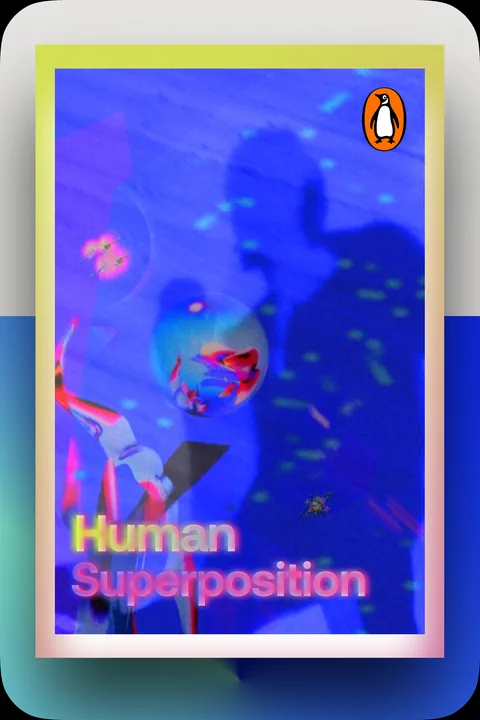
A philosophy of possibility, agency, records and the good life — repeatedly interrupted by evidence that the philosopher has not always been a reliable observer of his own reality.
It is not a philosophy book with a memoir attached, and not a bipolar memoir decorated with philosophy. It is a braid, and the two halves are supposed to damage each other a little. Black Holes in the Brain is not evidence that any of this is correct. It is the lived laboratory that makes the questions impossible to avoid.
The center holds even if every speculative sentence about physics is deleted: make ordinary existence excellent, preserve authorship, add rather than destroy, protect many forms of good life, keep extraordinary intensity available without making it compulsory — and stay extremely curious about what this place actually is.
Four modes keep interrupting and correcting one another. The reader should always be able to tell which one is speaking.
whimsical · serious · curious before authoritative
The philosophy itself: possibility, identity, freedom, agency, records, pluralism, technology, leisure, and what a good life even is.
immediate · strange · unresolved
The memoir, cut into case files. Lived episodes reconstructed from first-person memory, other observers, and records that do not always agree.
dry · disciplined · almost forensic
Short sections on memory, mania, sleep, information and observer problems, plus the timestamps, texts and receipts that change what can responsibly be claimed. Science clarifies; it does not authenticate metaphors.
absurd commercial optimism, then sincere
A ridiculous company appears the moment an existential problem is identified. Then a short essay explains, seriously, what it would add.
Not every chapter needs all six. The rhythm is the point: the inside account comes first and stays uncorrected, so the reader lives in an epistemic state before anyone explains it, and what can’t be resolved is kept as its own step.
Every claim carries its confidence in public. A proposition is not allowed to drift quietly up the scale between chapters, and the ones I hold most loosely are the ones the title is made of.
Build machines capable of 100 so humans remain free to choose 0.
We understand freedom perfectly well when we describe optional activity, and become extremely confused when we describe optional inactivity. A person's right to exist should not depend on maintaining maximum function.
Make ordinary existence excellent. Make extraordinary existence optional.
Not everyone should maximize themselves. Almost the opposite: make ordinary human life good enough that nobody has to become extraordinary in order to justify being here — and leave the intensity available for whoever wants it.
Harm as a goal is the one thing I am sure is wrong.
Add rather than destroy. But more is not the same as better: I would take fewer deeply good lives over an enormous number of barely-positive ones, while still preferring a large varied civilization to a small optimized monoculture.
Some suffering is a permanent human condition. Most of it is a backlog item.
Before you build a philosophy out of a hardship, check whether the hardship is load-bearing or merely unfixed so far. Dignity does not require preserving friction that engineering could delete.
Freedom is how many good lives stay reachable, and who can close them.
Not the number of options on the menu — the question of who retains the unilateral power to take them away. Steering counts even inside causation; the wheel is small and it is still a wheel.
Adults choose. Intervene only to hand the wheel back.
Intervention is justified only by strong evidence of collapsed agency or serious risk, and it should aim to restore control rather than punish the person. What counts as evidence, who decides, for how long, and who reviews it are rules I still owe the book.
Several incompatible lives can each be genuinely good.
A good life has more than one shape. Any system that ranks all real values into a single harmonious order has quietly deleted most of the people it claims to serve.
The machines may consolidate. The lives shouldn't.
Extreme AI capability might concentrate while human lives stay diverse and sovereign. It is the most dangerous unresolved assumption in the whole philosophy: who can still say no, leave, compete or appeal when the system that protects freedom is impossible to escape?
A past event reaches the present only through what survives it.
A memory is one survivor. A photograph is another. Your brother is another. A hospital chart is another. When they disagree, a record stops being proof and becomes a conversation.
Author your life without demoting anyone else's.
You are allowed to be the protagonist. So is everyone you will ever meet. Both halves of that sentence have to survive contact with a memoir in which other people's memories contradict mine.
Speculate wildly. Enthusiasm cannot upgrade a pattern into a fact.
Fast association generates hypotheses, jokes, songs and art. It does not validate claims about the outside world. The same engine wrote Dog Physics and built a universe out of coincidences; the difference is what happens after the idea arrives.
A person is a set of reachable lives, one of which is being observed into history.
This is the title, the organizing image, and the claim I hold most loosely. It is philosophy borrowing a word from physics — deliberately, with the receipt attached. See below for exactly where the borrowing stops.
Not forever, necessarily. Maybe Tuesday. Walk the dog, eat something good, call your brother, watch basketball, spend an unreasonable amount of time deciding whether an otter would make a competent accountant.
A civilization that offers you twenty thousand things you are free to accomplish, and makes catastrophe the penalty for accomplishing none of them, has not finished the freedom problem.
build machines capable of 100 so humans remain free to choose 0
Where I actually live: mostly at 1. I enjoy spikes at 10, rarely want 100, and love being at 0.
What a good civilization owes the dial: make 0 safe, 1 genuinely great, 10 voluntary, and 100 unnecessary except by choice or emergency.
The memoir enters this book as case files rather than chapters. Each one holds several registers at once and refuses to promote any of them to the story. Sources that have not been collected stay visibly uncollected — the gap is the form working, not the form failing.
The approach: 2022–23 work, relationships, travel, substances, sleep, art, AI.
The first radical split between experienced reality and shared reality. April 2023.
Recurrence, recognition, variation. November 2024 to January 2025.
The person who lived the episodes becomes the archivist of his previous selves.
Two blue Gatorades leaked. I had bought Gatorade for years. The bottles were thick, they got thrown around, and I could not remember two of them ever leaking like that.
Dad had been doing laundry for what felt like six days. I did not own six days of laundry.
Then my yellow shoes were buried behind things in the closet. I noticed that. Yellow. Not blue.
He looked at the stocked refrigerator and said: it's like you're in a movie.
At some point a sentence stops being a sentence and becomes evidence. Inside it, I did not feel as though I was inventing a story. I felt as though I was finally noticing the one everyone else had been living in.
source: contemporaneous author notes · confidence at the time: 95
Spotify began communicating with me through its recommendations.
I became certain the recommendations were communicating with me.
I remember becoming certain the recommendations were communicating with me. The surviving playlist establishes what I heard. It does not establish why those tracks appeared.
I thought they were doing it is a far more interesting sentence than they were doing it — and it is also the honest one. Descriptions of what I believed are descriptions of my experience, not assertions that those beliefs were true.
The title borrows a word. Superposition has an actual mathematical meaning, and physics deserves better than becoming decorative wallpaper for a person’s confusion. So every scientific note in the manuscript gets the same three-line check.
Environments redundantly imprint information about certain robust states, which is part of how many observers come to share the same classical facts.
It does not establish that human memories, choices or identities are quantum superpositions. Please do not tell your mother her recollection of Christmas is a pointer state.
It gave me a genuinely scientific object to think about while writing philosophically about records and observers.
A precise mathematical account of communication under uncertainty: channels, signal, noise, redundancy, and how much a message can actually carry.
It does not license the claim that human meaning is Shannon information, or that anything mysterious can be relabeled 'information' and count as explained.
So that when this book says signal or noise, you can tell whether I am being technical or poetic.
Autobiographical memory is actively constructed rather than played back, and source monitoring is the judgment by which we decide where a remembered thing came from.
It does not mean memory is worthless, or that any specific recollection of mine is false. Population findings cannot adjudicate one person's April.
It is the method behind every Record in this book: interview everyone independently, before anyone sees anyone else's version.
The fact that a manic mind generated ideas about entanglement, primes, colors and observers is autobiographically fascinating and gives those theories no additional scientific probability whatsoever. Both things are allowed to be true.
The moment an existential problem is identified, some deranged corporation appears and claims to have solved it. Every fake company is a tiny counterfactual — and every one of them eventually earns a short, entirely sincere essay called why I actually like this.
History is currently run by people who remembered to write things down.
this seems like a design flaw
Your grandmother knows why her father never ate peaches.
Your uncle remembers the exact sound your grandfather made when the Titans lost.
Someone knows why the family stopped speaking to Cousin Paul in 1987.
Nobody has asked.
Eventually nobody can.
HEIRLOOM™ is an extremely complicated artificial-intelligence system designed to accomplish a technological feat previously believed impossible: calling your mother.
Family arguments sold separately. Heirloom cannot guarantee that Grandpa’s version of what happened in Destin in 1994 is accurate. Neither can Grandpa.
What Heirloom adds is not another object. It adds record.
Most human experience disappears, and that is not automatically tragic — a universe in which every sandwich receives a permanent entry sounds exhausting. But something is wrong with the asymmetry in what survives us. Institutions preserve presidents, wars, acquisitions, championships and court cases. Families lose the texture: voices, jokes, ordinary preferences, why someone became afraid of water, why another person loved one particular song.
History has high standards for admission. Love doesn’t. Maybe our tools should reflect that.
next in the rotation · gameframe™ · kafka compliance™ · deskbed™ · untrue crime · eyes of · firstfile
Adville asks what a company could add. Eventually the question outgrows companies. Project Camoflaudgin turns this book’s philosophy into a party platform you can stress-test: eight policies, six human needs, five futures, and a rule that every loss is shown next to every gain.
“Maximize Relative Utility + Reduction of Harm, Stress, and Suffering + Keep America a Cultural and Technological Foundation for a ‘Win-Win’ World.”
the mission, from my notes · also printed in black holes in the brain
Care, security, freedom, and fewer avoidable burdens.
Chosen work, discovery, relationships, fair games, and time.
Government should reduce harm, stress and suffering, and what everyone should receive is “a good life.” Money and output matter through the lives they make possible: security, health, time, freedom, relationships.
Freedom, personal choice, clean exits, less compulsion. Build intensely or live an ordinary, pleasurable life. Protection should restore agency, which leaves a real question about who judges the boundary.
Look for better systems, trust and cooperation first, and keep fair, meaningful human competition even after machines outperform us. More useful games, fewer destructive conflicts.
Inheritance, effort, output and risk still count today. Widen access to a good life while leaving room for personal projects and voluntary achievement.
AI delivering more services, income less tied to employment, more time for friends, culture, discovery, nature, animals and play. The timing, ownership and distribution are still open questions.
People need true facts to act. Expose the assumptions, and revise a policy when the evidence changes.
Family and close relationships matter; loneliness and purposelessness are avoidable suffering. In public institutions that needs a rule: care for your own without making anyone’s entitlements depend on who they know.
A cultural and technological foundation for a win-win world: freedom, learning, invention, protection from oppression, practical improvement, and room to update inherited arrangements.
Each need comes with the line from my own interview answers it grew out of. My weights are starting points, not measured beliefs. Set yours and see how far apart we are.
“yes a good life”
“pro stay alive as long as possible”
“you can educate me… but you cant make me”
“watch stuff, chill, meet up with friends”
“all you want is stakes in competition in a fair game”
“the true facts to act”
Every plank ships with its own trade-off and the measurement that would prove it wrong.
More housing capacity, simpler approvals, and mobility support.
Accessible primary care, prevention, and support for caregivers.
Portable benefits, income bridges, and paid routes into new work.
Reliable energy, grid capacity, and resilient public infrastructure.
Research access, interoperability, and fewer barriers to new entrants.
An income floor that can grow if productive capacity genuinely grows.
Clear services, public evidence, independent audits, and routes to appeal.
Care relief, public spaces, culture, and voluntary human competition.
Fast tools. Uneven gains.
Who gets the gain, and who absorbs the transition?
Productivity reaches daily life.
Does more output become more freedom and time?
The breakthrough takes longer.
Can today’s promises survive without a technology windfall?
Infrastructure under pressure.
Which protections hold when the world gets harder?
Capability grows. Choice narrows.
Who can say no, leave, compete, or appeal?
A win for the model is only a reason to investigate a policy.
Every score in the simulator is an authored game assumption. It doesn’t forecast elections, estimate tax dollars, or establish what anyone else wants; the wider public is not this room. The simulator stays private while it’s being built.
A working architecture, not a locked table of contents. Several of these will merge. The order is the argument. Revised September 2026.
target · 105,000–120,000 words · philosophy is the spine
Two manic episodes, the color game that ran the universe, the show that was never being filmed, and the gaps left behind. It supplies the Records — and it is the reason none of the philosophy above is allowed to sound certain.
read the memoir →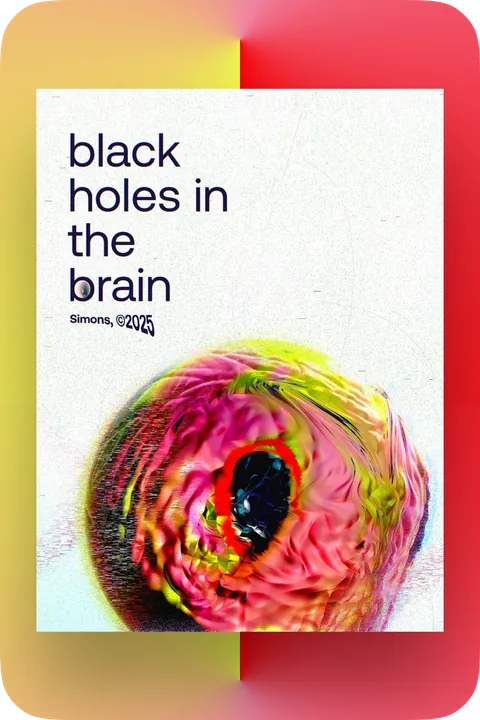
A note on the Records: these sections reconstruct periods of mania from my own memories, contemporaneous notes, surviving artifacts and the memories of other people. Accounts sometimes disagree. I have preserved some of those disagreements deliberately. Descriptions of what I believed are descriptions of my experience, not assertions that those beliefs were objectively true. Real people wander through all of it; on this page they stay anonymous, and in the book they get fake names and real love.
never flatten uncertainty to make the story cleaner · make uncertainty part of the form